
PLAN WITH CONFIDENCE
Know what works before you book
Redesigning eModal appointments to reduce failures
by showing real availability before submission.

Explore the transformation
Before
Blind start → fragmented effort → late feedback → unclear outcome
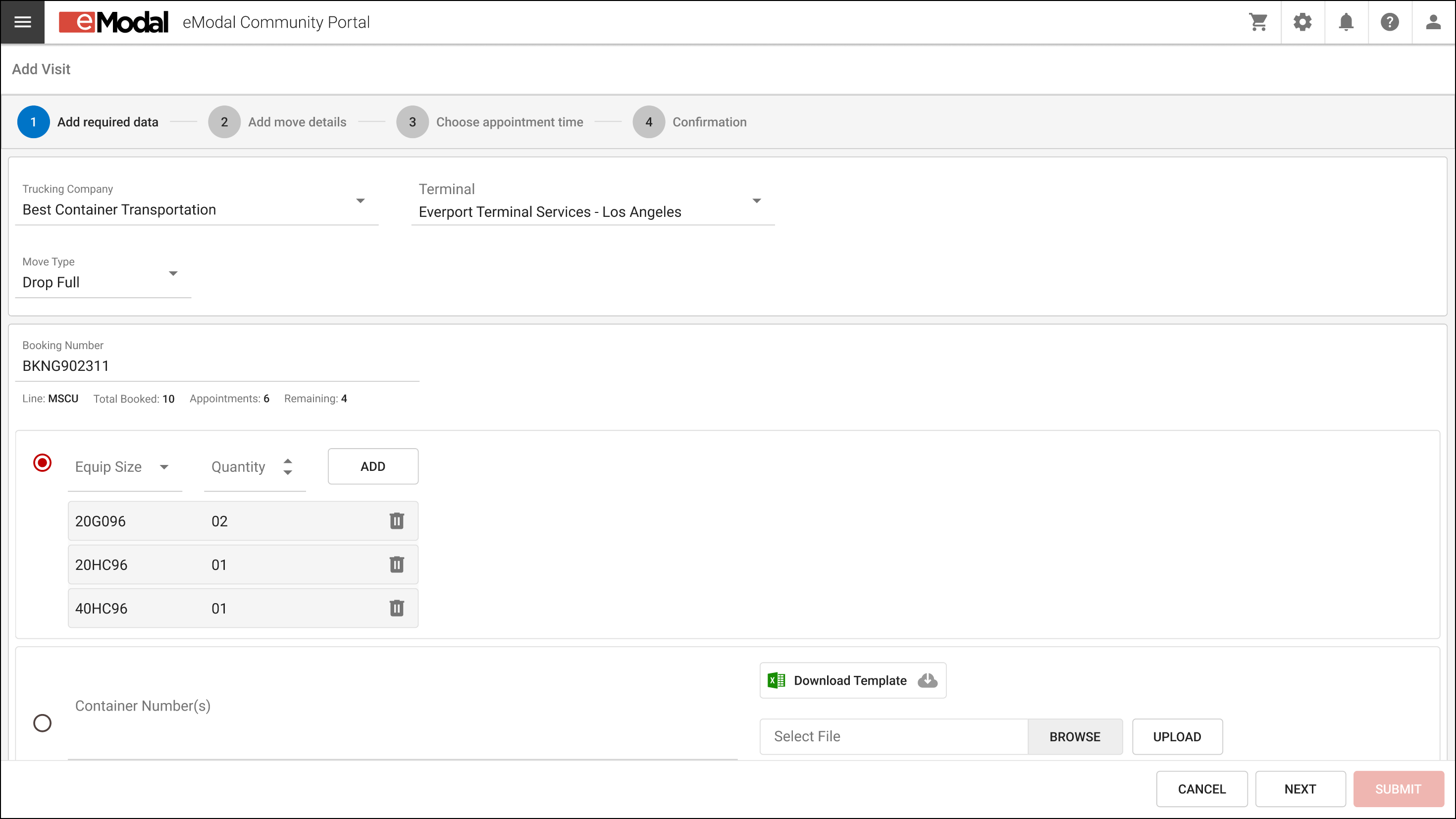
Step 1 – Starting without context
Users begin by entering booking details and container quantities, but have no visibility into slot availability or constraints. Decisions are made blindly, often leading to rework later.
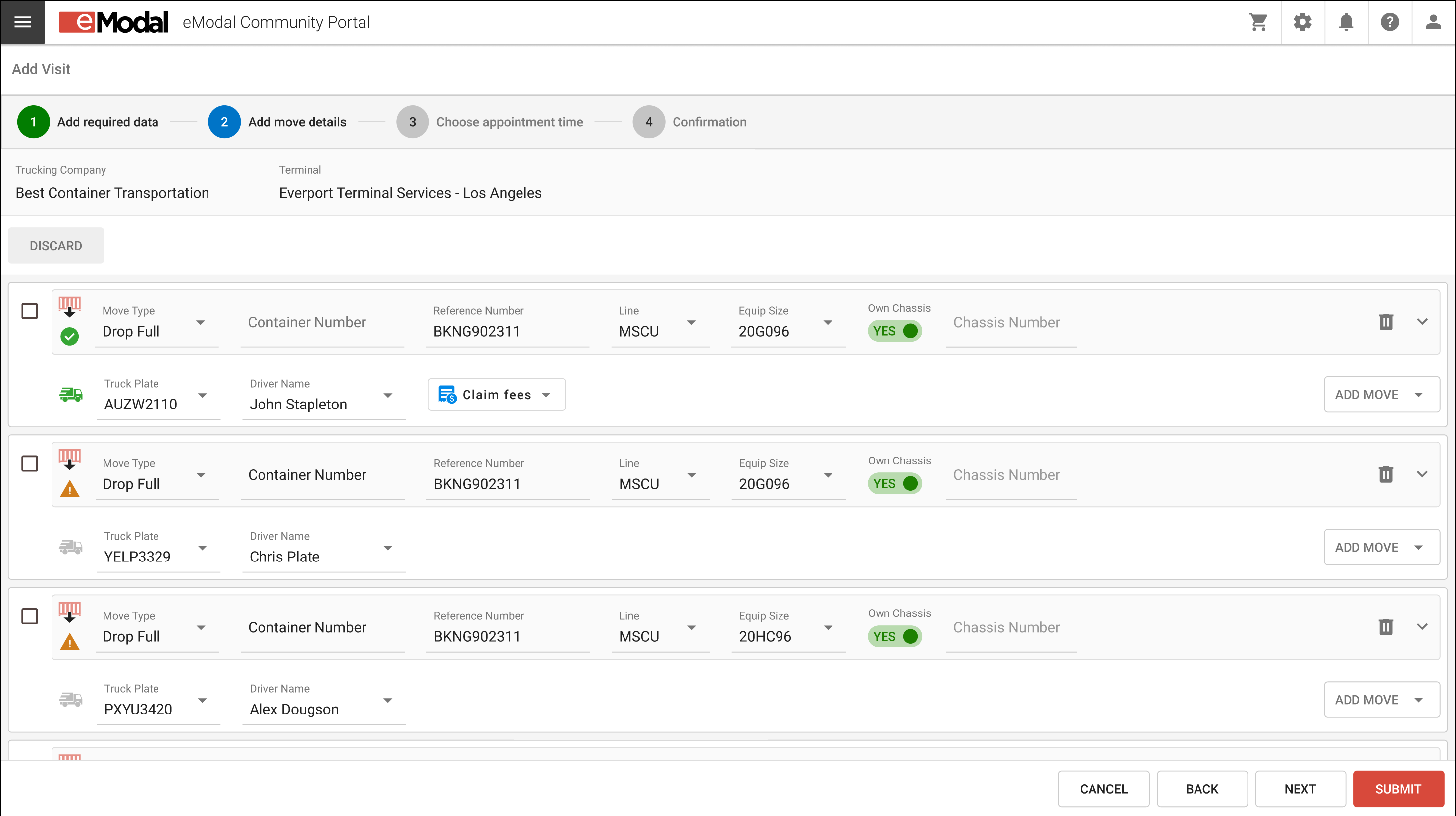
Step 2 –Repetitive, move-by-move effort
Each container becomes a separate “move,” requiring users to repeatedly enter similar information. What should be a single intent turns into fragmented, manual work.
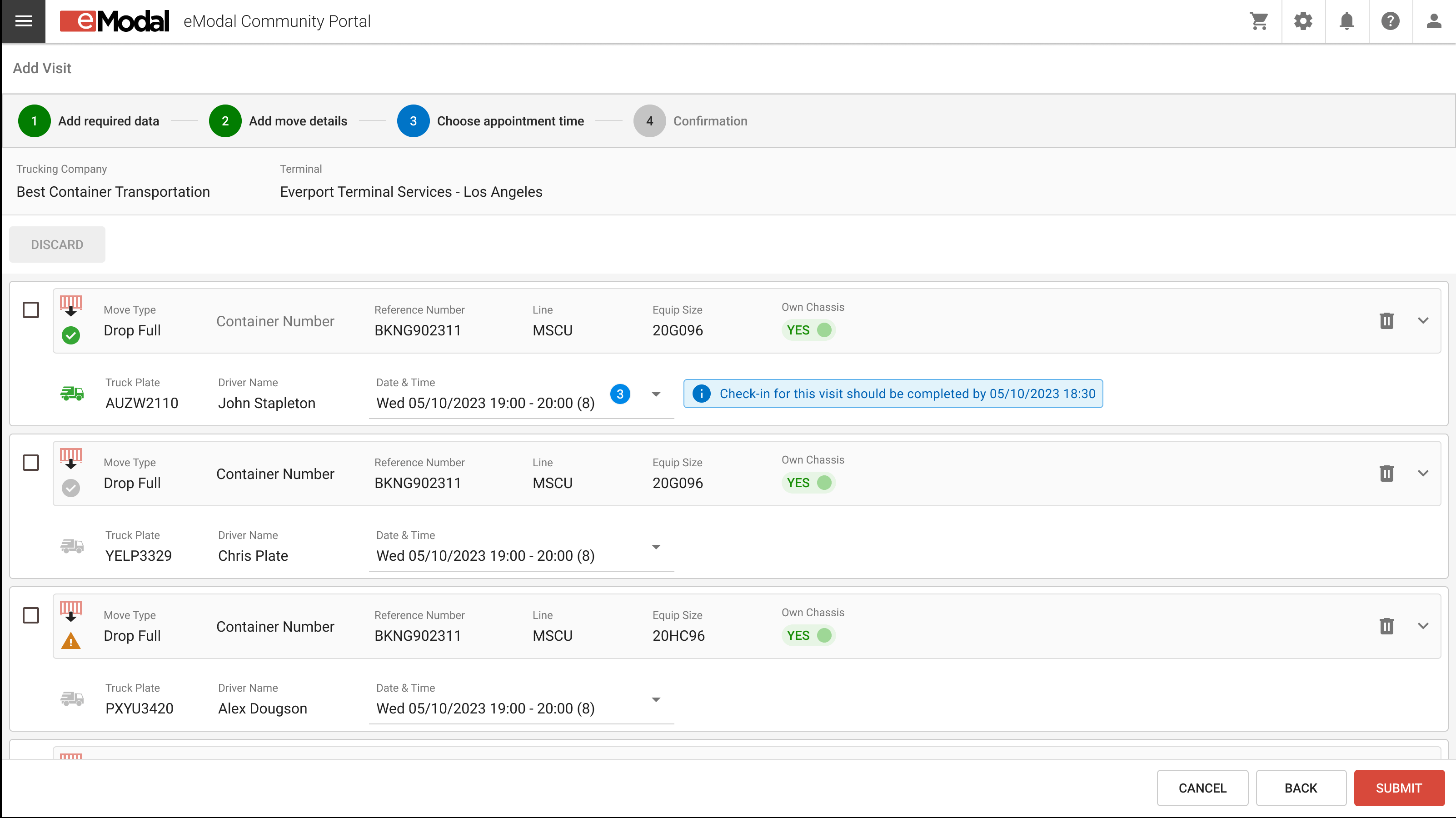
Step 3 – Availability revealed too late
Appointment slots are only shown after all details are filled in. If slots don’t align with the user’s needs, they must go back and adjust inputs—breaking flow and increasing frustration.
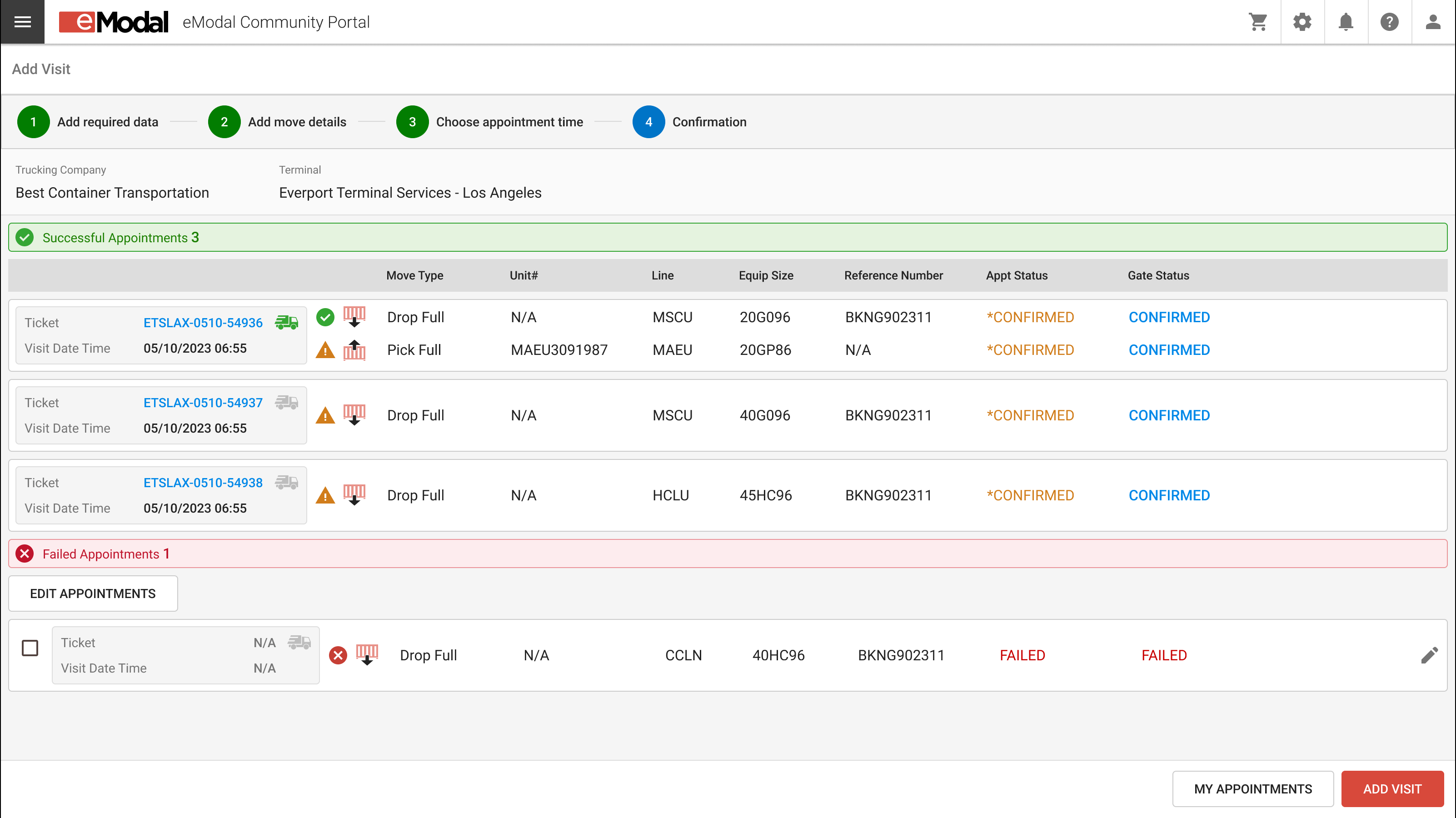
Step 4 – Unclear outcomes at confirmation
The final step mixes successful and failed appointments without clearly explaining what caused failures or how to resolve them, leaving users uncertain about next actions.

Shift
Old experience → New experience
Form filling → Slot discovery
User effort → System assistance
Trial & error → Informed decisions
Fragmented moves → Unified scheduling
Surprises → Confidence
After
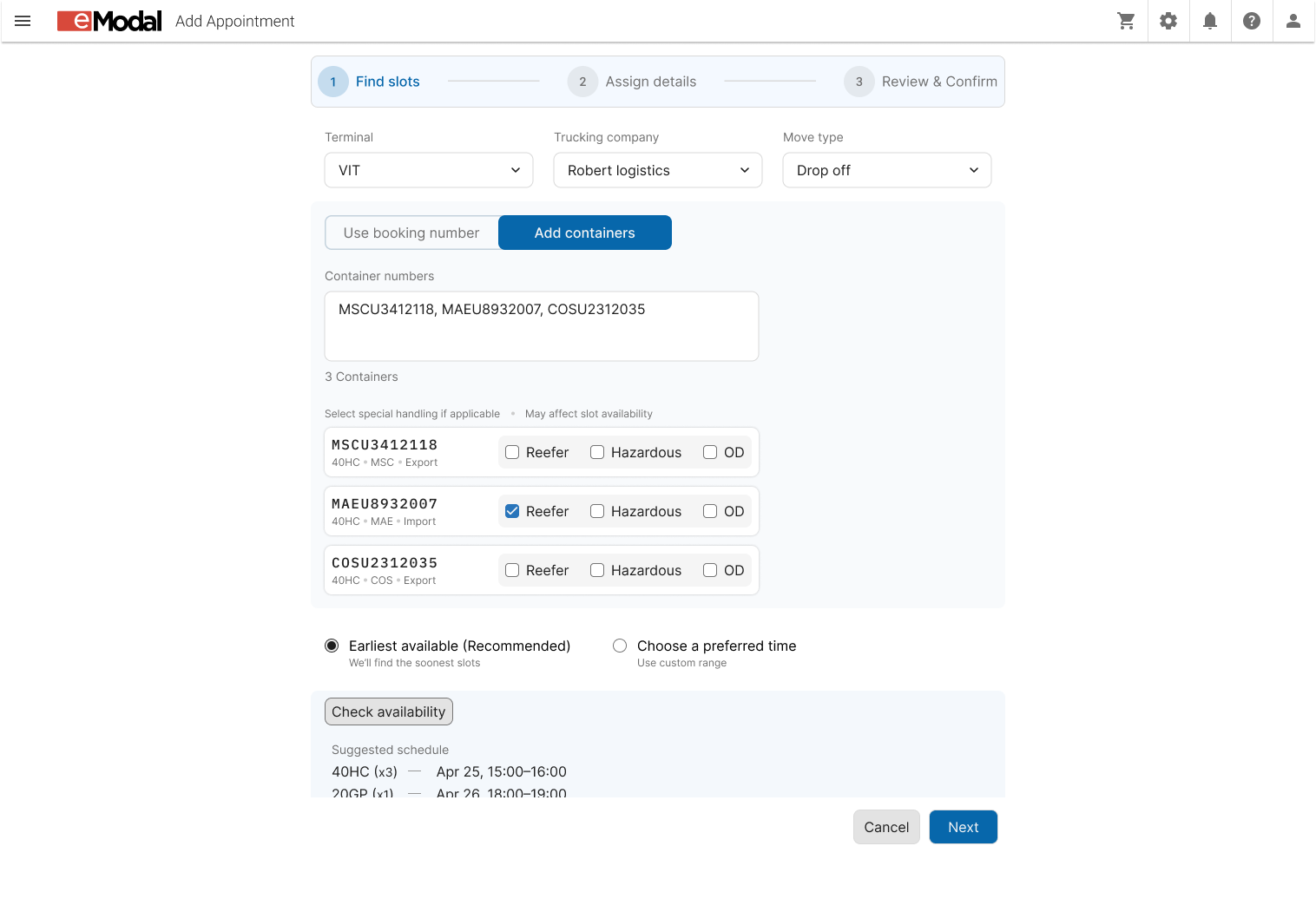
Find slots — Start with availability
Users begin by defining their requirement and immediately checking availability.
The system suggests the earliest feasible slots, helping users understand what’s possible before moving forward.
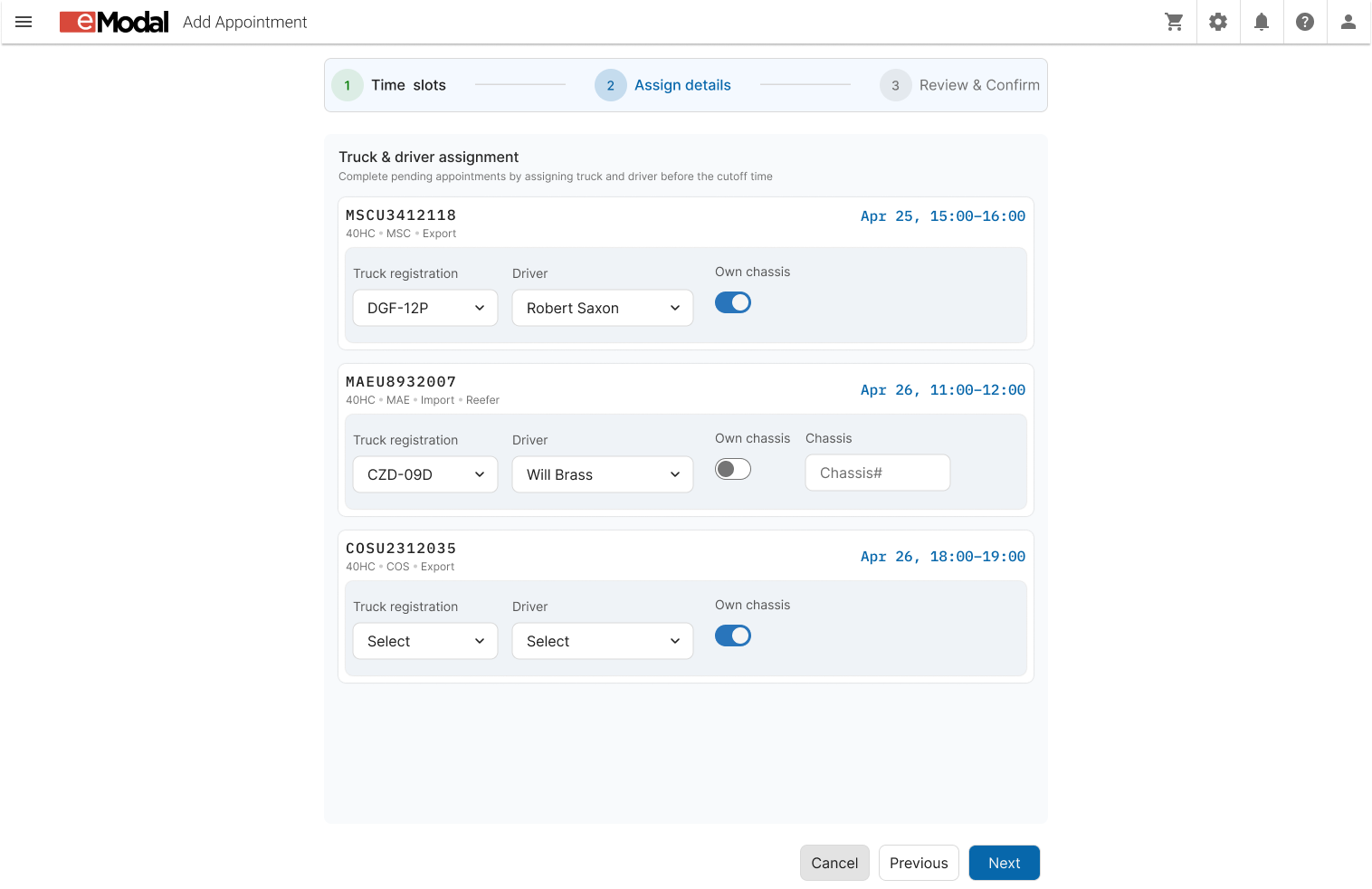
Assign details — Structured and contextual assignment
Once slots are selected, users assign trucks and drivers per container.
The layout groups containers by time slot, making it easy to manage multiple moves without repetition.
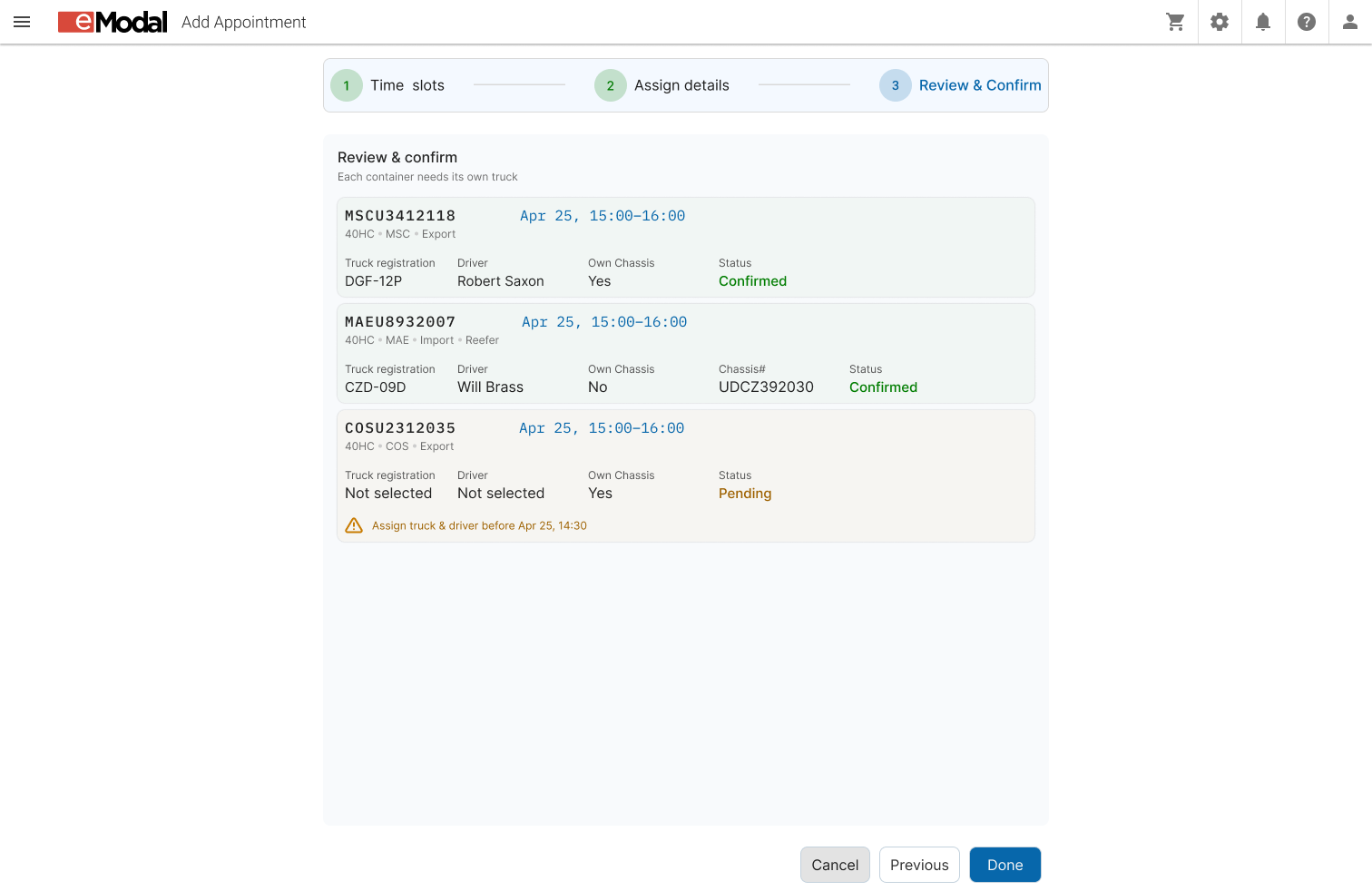
Review & confirm — Clear status and accountability
Each appointment is clearly marked as confirmed or pending.
Users can quickly identify what’s incomplete and take action before the cutoff time, ensuring no surprises at submission.
Then vs now
Experience how the product evolved
From interpreting data to being guided toward decisions.
Then
Where it breaks
See how the system surfaces data but fails to guide decisions


See how insights, context, and actions come together to guide decisions


PLAN WITH CONFIDENCE
Know what works before you book
Redesigning eModal appointments to reduce failures
by showing real availability before submission.
Explore the transformation
Before
Blind start → fragmented effort → late feedback → unclear outcome
Step 1 – Starting without context
Users begin by entering booking details and container quantities, but have no visibility into slot availability or constraints. Decisions are made blindly, often leading to rework later.
Step 2 –Repetitive, move-by-move effort
Each container becomes a separate “move,” requiring users to repeatedly enter similar information. What should be a single intent turns into fragmented, manual work.
Step 3 – Availability revealed too late
Appointment slots are only shown after all details are filled in. If slots don’t align with the user’s needs, they must go back and adjust inputs—breaking flow and increasing frustration.
Step 4 – Unclear outcomes at confirmation
The final step mixes successful and failed appointments without clearly explaining what caused failures or how to resolve them, leaving users uncertain about next actions.
Shift
Old experience → New experience
Form filling → Slot discovery
User effort → System assistance
Trial & error → Informed decisions
Fragmented moves → Unified scheduling
Surprises → Confidence
After
Find slots — Start with availability
Users begin by defining their requirement and immediately checking availability.
The system suggests the earliest feasible slots, helping users understand what’s possible before moving forward.
Assign details — Structured and contextual assignment
Once slots are selected, users assign trucks and drivers per container.
The layout groups containers by time slot, making it easy to manage multiple moves without repetition.
Review & confirm — Clear status and accountability
Each appointment is clearly marked as confirmed or pending.
Users can quickly identify what’s incomplete and take action before the cutoff time, ensuring no surprises at submission.
Then vs now
Experience how the product evolved
From interpreting data to being guided toward decisions.
See how the system surfaces data but fails to guide decisions

See how insights, context, and actions come together to guide decisions

PLAN WITH CONFIDENCE
Know what works before you book
Redesigning eModal appointments to reduce failures
by showing real availability before submission.
Before
Blind start → fragmented effort → late feedback → unclear outcome
Step 1 – Starting without context
Users begin by entering booking details and container quantities, but have no visibility into slot availability or constraints. Decisions are made blindly, often leading to rework later.
Step 2 – Repetitive, move-by-move effort
Each container becomes a separate “move,” requiring users to repeatedly enter similar information. What should be a single intent turns into fragmented, manual work.
Step 3 – Availability revealed too late
Appointment slots are only shown after all details are filled in. If slots don’t align with the user’s needs, they must go back and adjust inputs—breaking flow and increasing frustration.
Step 4 – Unclear outcomes at confirmation
The final step mixes successful and failed appointments without clearly explaining what caused failures or how to resolve them, leaving users uncertain about next actions.
Shift
Old experience → New experience
Form filling → Slot discovery
User effort → System assistance
Trial & error → Informed decisions
Fragmented moves → Unified scheduling
Surprises → Confidence
After
Find slots — Start with availability
Users begin by defining their requirement and immediately checking availability.
The system suggests the earliest feasible slots, helping users understand what’s possible before moving forward.
Assign details — Structured and contextual assignment
Once slots are selected, users assign trucks and drivers per container.
The layout groups containers by time slot, making it easy to manage multiple moves without repetition.
Review & confirm — Clear status and accountability
Each appointment is clearly marked as confirmed or pending.
Users can quickly identify what’s incomplete and take action before the cutoff time, ensuring no surprises at submission.
Then vs now
Experience how the product evolved
From interpreting data to being guided toward decisions.
Then

Where it breaks
See how the system surfaces data but fails to guide decisions
See how insights, context, and actions come together to guide decisions